Free shipping on orders over €70
Strawberry Apple - RED BOTH OUTSIDE AND INSIDE
THE RED APPLE BOTH OUTSIDE AND INSIDE
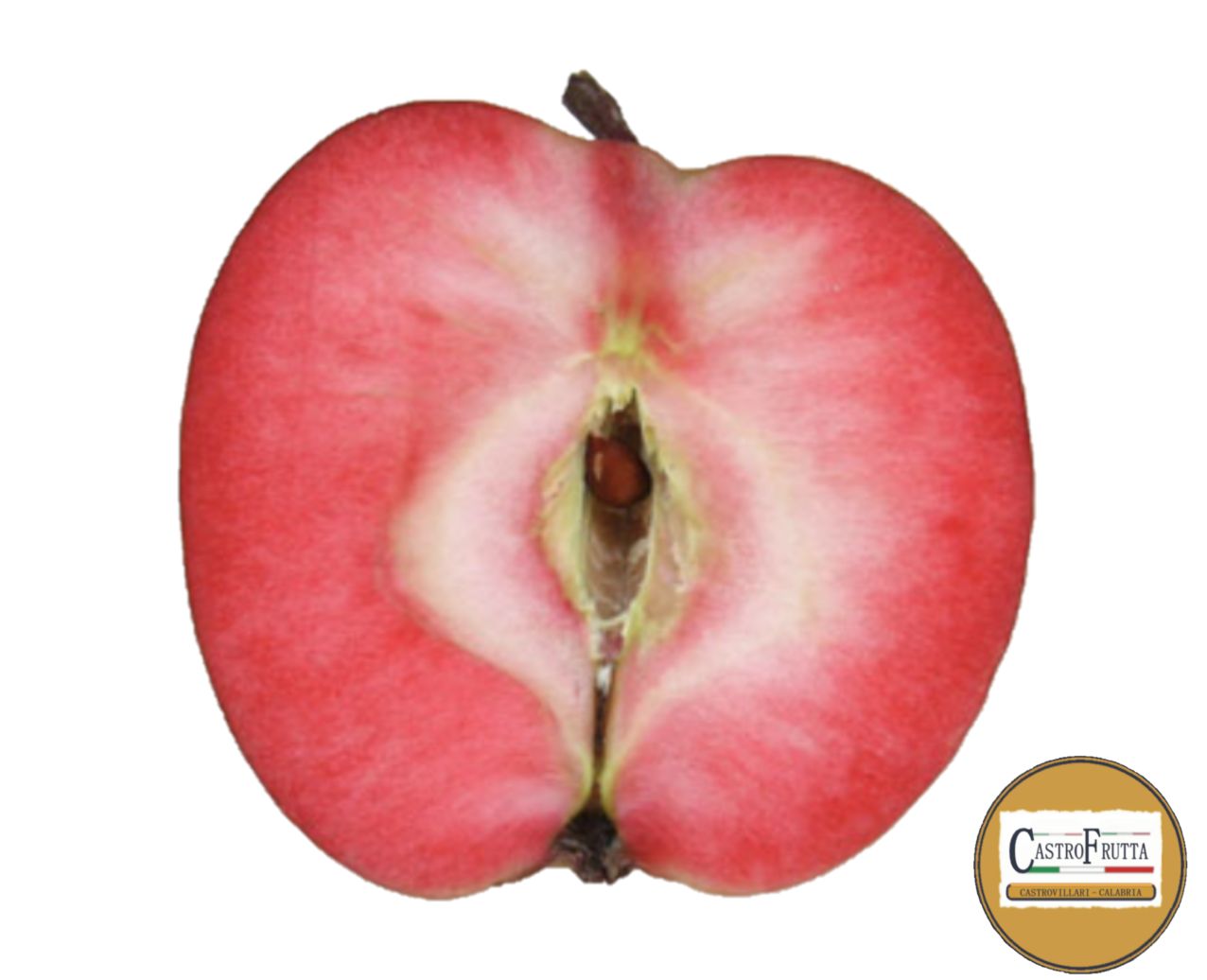
The name " StrawberryApple " It does not refer to a hybrid between an apple and a strawberry, but derives mainly from the intense red color of both its peel and its pulp, but also from an intense, distinctly aromatic and fragrant flavor/aroma, which some believe recalls the aroma of strawberries.
🎨 Visual Characteristics of the Fruit
Visual characteristics may vary, but in general:
Size and Shape: Medium-small, often flattened or slightly asymmetrical in shape.
Peel: The skin is usually smooth and medium thick. The color is orange-red or bright red.
Pulp: pink or red, which when vertical can also have an internal shape that resembles a heart.
Organoleptic Characteristics
What makes it special is its distinctive aromatic profile:
Taste: Exceptionally sweet and juicy, the pulp has aromatic notes reminiscent of berries, or more specifically, strawberries. The sweetness is generally well-balanced.
Perfume: One of its most fascinating qualities is its enveloping and intense, fruity aroma, which is often described as a fusion of apple and strawberry.
Texture: The flesh is usually crunchy and juicy when eaten fresh.
🧑â€ðŸ³ How to Use It in the Kitchen
The Strawberry Apple is extremely versatile and can be used in a myriad of ways, both raw and cooked:
Fresh Consumption: It's ideal enjoyed on its own as a nutritious snack thanks to its sweetness and crunchiness. Its smaller size in some varieties makes it a perfect "snack apple" for children.
Sweets and Pastries:
Cakes and Pies: Its unique flavor and bright color (especially if you use the red-fleshed variety) enrich cakes, tarts and strudels.
Sauces and Jams: It is perfect for making homemade jams, compotes and preserves, which retain its distinctive aroma.
Drinks:
Extracts and Centrifuges: It pairs well with other fruits (such as kiwi and ginger) to create fresh, aromatic and vitamin-rich drinks.
Savory Dishes:
Salads: Its balanced sweetness can be a great counterpoint in mixed salads, especially paired with nuts, strong cheeses (like Gorgonzola), and leafy greens.
Meats: It can be used to enrich pork or turkey roast fillings, where its sweet-sour flavor helps degrease and balance the dish.